Sunflower as the Foundation of Agro-Industrial Production: From Cultivation to Processing
10/08/2026
Sunflower plays an important role in Ukraine’s agricultural production. Its cultivation is not limited to supplying raw material for oil production. Modern sunflower processing makes it possible to use different components of the seed and produce several types of products for the food, feed, and energy industries. This makes sunflower an important part of Ukraine’s agro-industrial production chain.
The journey from sunflower cultivation to finished products consists of several stages. After harvesting, sunflower seeds need to be received, their quality checked, cleaned when necessary, and stored under appropriate conditions. For agricultural companies, it is important to organise these processes so that the raw material retains its properties until processing.
Storage is particularly important during the post-harvest period. Large volumes of sunflower seeds require appropriate infrastructure and well-organised logistics. The ability to receive, store, and subsequently transport raw materials makes it possible to plan production processes and cooperation with suppliers more efficiently.
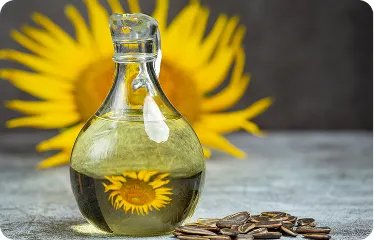
After arriving at the processing facility, sunflower seeds undergo technological processes that result in finished products. One of the main products is sunflower oil. It has a wide range of applications in the food industry and can also be used for industrial purposes.
For the wholesale market, the ability to supply large batches is an important factor. Sunflower oil can be shipped in bulk by tanker truck, rail tank car, or flexitank. This makes it possible to organise deliveries by road or rail and adapt logistics to the buyer’s requirements.
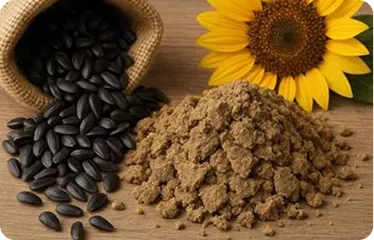
At the same time, sunflower processing is not limited to oil production. High-protein sunflower meal is another important product. It is used as feed raw material and in compound feed production. Its protein content makes sunflower meal a valuable ingredient for businesses operating in the feed industry.
The high-protein sunflower meal produced by INTER OLIYA LLC contains more than 32% protein on an as-is basis. Other specifications include approximately 7% fat, approximately 8% moisture, and approximately 18% fiber. The product is supplied in flake form and is available for wholesale customers.
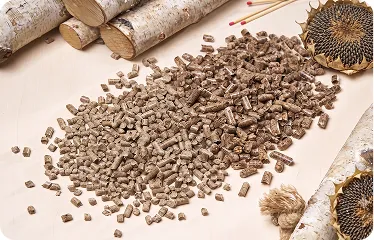
Another way to use sunflower processing products is the production of fuel pellets from sunflower husk. Husk generated during processing can be used as raw material for biofuel production. This gives the material a practical application in the energy sector rather than leaving it as an unused by-product.
Sunflower husk fuel pellets are used for heating, industrial boiler houses, and industrial fuel applications. For wholesale customers, not only product specifications but also convenient shipping options are important. Fuel pellets can be supplied in bulk or in big bags.
This comprehensive approach demonstrates the importance of efficient agricultural raw material utilisation. The production of sunflower oil, sunflower meal, and fuel pellets creates several commercial product streams from a single crop. Each product has its own customers, transportation requirements, and applications.
For an agricultural business, it is important not only to grow sunflower but also to have a stable chain for its further utilisation. Cooperation between agricultural producers, storage facilities, processors, and final buyers helps create a more efficient system for moving raw materials and finished products.
INTER OLIYA LLC operates within this production chain by combining sunflower processing with wholesale product supply. The company produces sunflower oil, high-protein sunflower meal, and sunflower husk fuel pellets.
For Ukraine’s agricultural sector, the development of processing is strategically important. It makes it possible to go beyond selling agricultural raw materials and create finished products with added value. The development of such production chains contributes to a modern agro-industrial system where cultivation, processing, storage, and logistics operate as an integrated process.